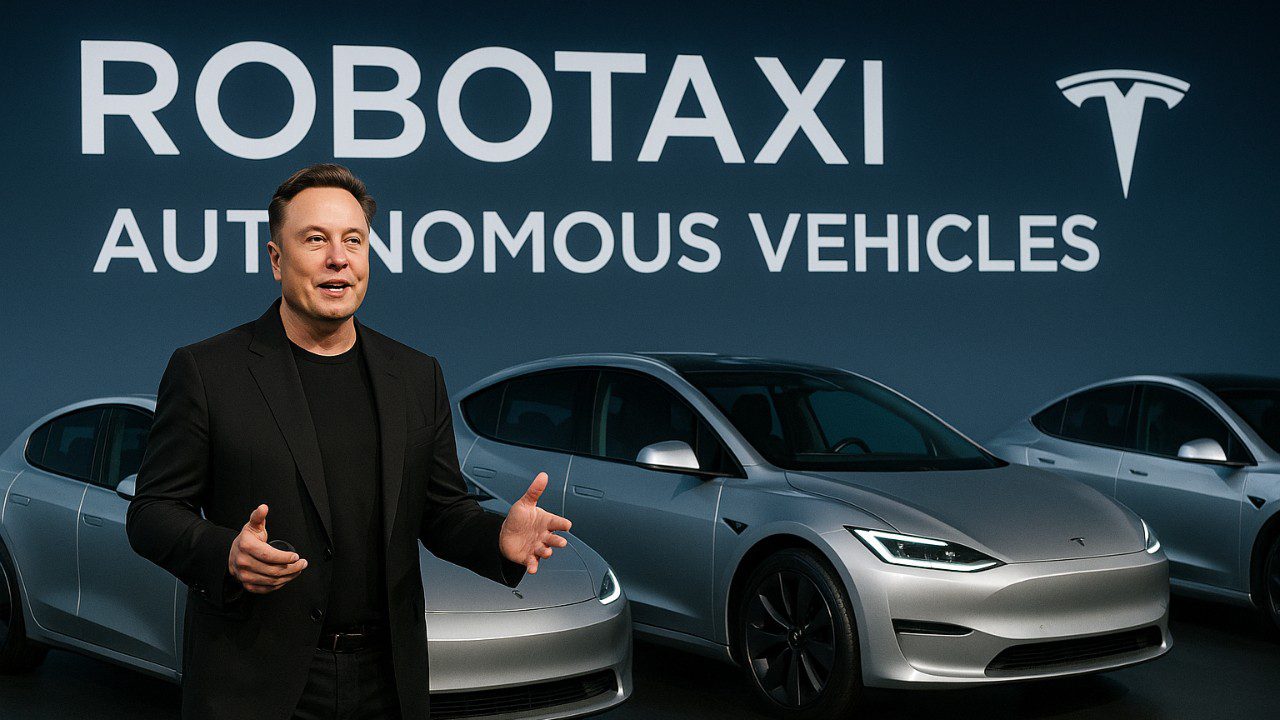
Tesla stands at a critical turning point in 2025. CEO Elon Musk’s grand vision for autonomous driving and AI-driven solutions faces real-world challenges. After years of promises, Tesla’s ambitious plans for a Robotaxi service and affordable electric vehicles (EVs) are finally being tested against tough market realities, regulatory scrutiny, and fierce competition.
Elon Musk’s Bold Vision Meets Reality
Elon Musk recently doubled down on Tesla’s autonomous future, confidently stating that by 2026, “hundreds of thousands, if not over a million,” Tesla vehicles will drive themselves across the U.S. without human intervention. His immediate focus is the launch of Tesla’s Robotaxi service in Austin, Texas, slated for June 2025, with expansion plans already in place for major cities like Los Angeles and San Francisco.
Yet, critics remain skeptical. Musk’s infamous history of missing autonomy deadlines over the past decade makes some analysts wary. Still, Musk remains undeterred, emphasizing Tesla’s superiority over competitors like Waymo and promising that Tesla’s dedicated Cybercab, a two-seater vehicle without steering wheels or pedals, is already in preparation.
Tesla’s Financial Struggles Reflect Operational Realities
Tesla’s recent earnings report paints a sobering picture:
- Revenue down 9% year-over-year at $19.34 billion in Q1 2025.
- Net income dropped sharply to just $409 million.
- Automotive sales fell 20%, partly due to reduced vehicle prices.
- Adjusted EPS missed analyst expectations by a significant margin, coming in at just $0.27 versus the forecasted $0.40.
Despite these alarming numbers, Tesla remains cash-positive, holding $37 billion in reserves, and has maintained robust energy storage growth, with 10.4 GWh deployed.
The financial struggles highlight a fundamental shift in Tesla’s narrative: transitioning from purely an EV automaker to an AI-driven technology company. Investors are clearly betting on Tesla’s potential in autonomous technology and robotics rather than its current profitability.
Musk’s Political Moves Impact Tesla’s Brand
Elon Musk’s involvement with the Trump administration, notably through the controversial Department of Government Efficiency, has been divisive. Musk’s political ties, including over $250 million in campaign donations, correlate with measurable brand damage. Tesla’s U.S. and European sales have significantly declined, indicating a loss of consumer trust.
Acknowledging this fallout, Musk plans to dial down political activities, hoping to rehabilitate Tesla’s brand reputation.
Product Innovations and Challenges
Tesla’s product roadmap remains ambitious, featuring:
- Affordable EVs: Tesla’s new stripped-down Model Y variant aims for a sub-$30,000 price tag, targeting mass-market affordability.
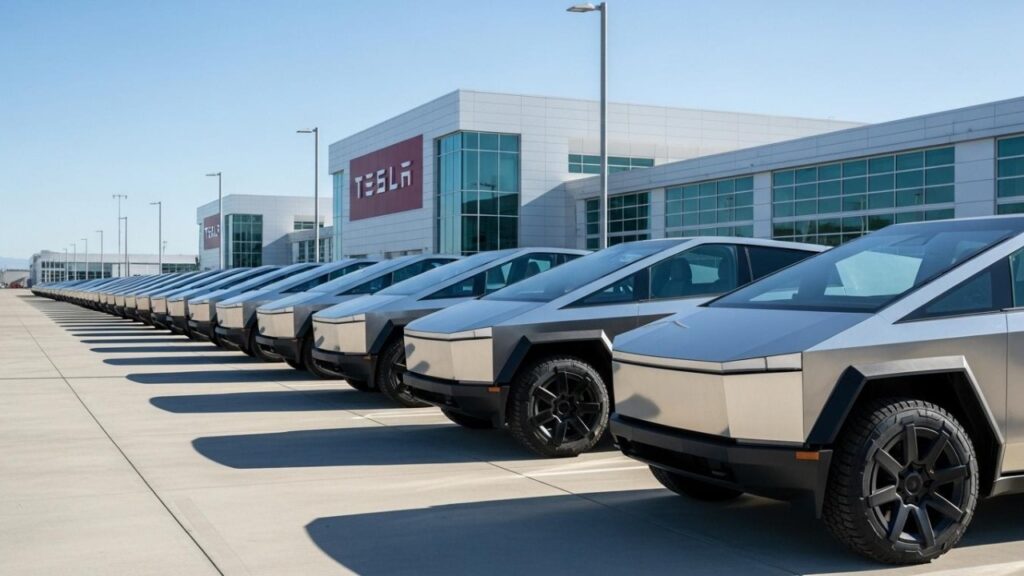
- Cybertruck RWD variant: A cheaper, rear-wheel-drive model has been introduced to boost lagging sales.
- Cybertruck inventory crisis: Over 10,000 unsold Cybertrucks, worth approximately $800 million, indicate significant market challenges and production scaling issues.
Tesla’s innovative software updates, like adaptive headlights and improved Sentry Mode, continue to enhance the driving experience, showing the company’s commitment to technological advancements.
Manufacturing Milestones Amid Operational Challenges
Tesla’s global manufacturing footprint is scaling impressively:
- Giga Berlin: Celebrated its 500,000th Model Y, despite regulatory hurdles and higher labor costs.
- Giga Texas: Reached its 400,000th vehicle milestone, preparing production lines for Robotaxi and affordable EV variants.
- Giga Shanghai: Set records for rapid production ramp-up, though facing declining sales and intensifying competition from local brands like BYD.
Despite manufacturing achievements, Tesla has also made significant workforce cuts, shedding over 14,000 jobs since 2024, reflecting cost-cutting pressures.
Regulatory Scrutiny and Safety Concerns Mount
Tesla’s autonomous driving technologies remain under intense regulatory scrutiny, notably by the National Highway Traffic Safety Administration (NHTSA), which has requested detailed safety and operational data ahead of the Robotaxi launch.
Recent vehicle recalls, including significant ones for Cybertruck defects and camera system failures, underline Tesla’s ongoing struggle with quality assurance. The company’s increasing recalls highlight the challenges of scaling innovative but complex technologies rapidly.
Competition Heating Up Globally
Tesla is feeling significant pressure from competitors:
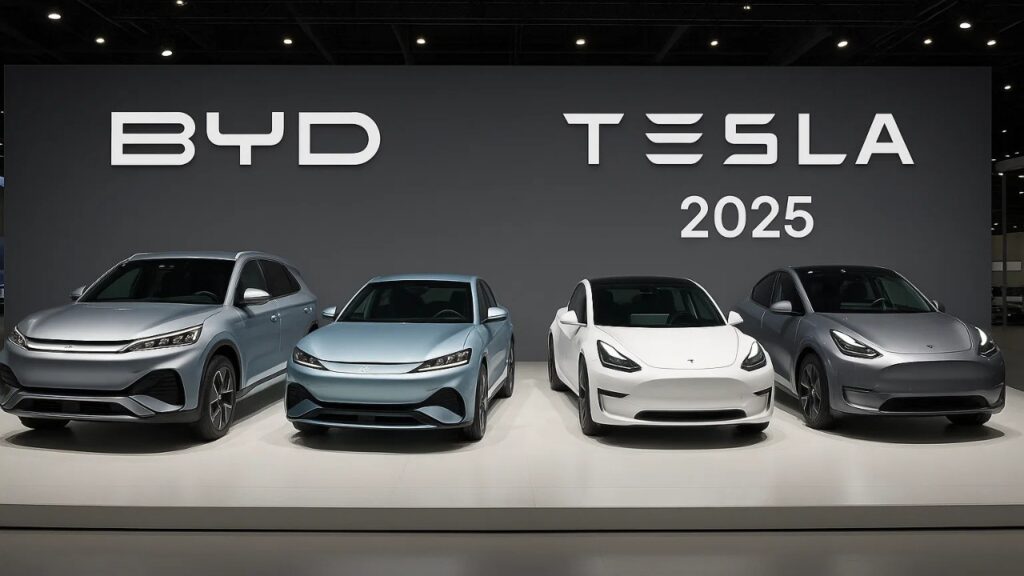
- BYD: Surpassed Tesla as the top global BEV manufacturer, dominating Chinese and European markets.
- Xiaomi: Successfully launched competitive EV models like the SU7 sedan and YU7 SUV, directly challenging Tesla’s Model 3 and Model Y.
- Volkswagen and GM: Both automakers have significantly increased their EV market share in Europe and China, respectively, further eroding Tesla’s dominance.
Tesla’s diminishing market share, coupled with consumer preference shifting towards affordability and reliability, poses a stark challenge to the company’s historically premium positioning.
Tesla’s Make-or-Break Moment
Tesla’s future hinges on executing critical initiatives:
- Successful rollout of affordable EV models.
- Proven, safe deployment of autonomous technologies.
- Strategic management of its supply chains, particularly battery sourcing.
Failure in these areas risks further erosion of investor confidence and consumer trust. Tesla’s bold innovations have always been its hallmark, but now more than ever, market realities demand tangible results over visionary promises.
Also Read: Google’s Gemini Era: How AI Is Redefining Everything at Google I/O 2025